
Introduction
Jambhoji or Guru Jambheshwar was born in 1451 AD in a Rajput family of Panwar clan in a remote Rajasthani village Pipasar in Nagaur district (Rajasthan). His father’s name was Lohatji Panwar and mother's name was Hansabai Bhati. Jambhoji spent 27 years grazing cattle in the wilderness, sitting alone and meditating. During this time, he became passionate about the pastoral landscape of the desert.
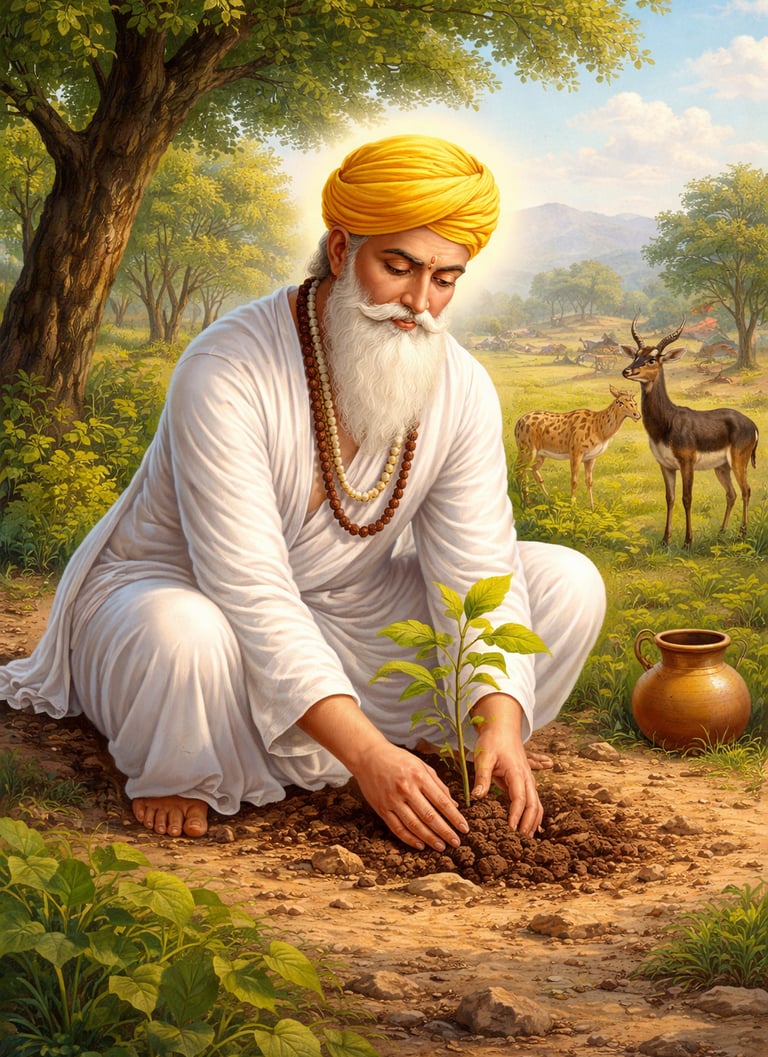
After the death of his parents, in 1483, Jambhoji left his home and made Samarathal Dhora his penance. Advocating the worship of Lord Vishnu, Jambheshwar strictly prohibited animal killing and cutting of trees. He emphasized compassion toward nature and protection of wildlife as the supreme religious goal to his followers in the preaching. He was very keen on social welfare and helping others.
He founded the Bishnoi sect in 1485 at Samarthal Dhora village near Nokha in Bikaner district of Rajasthan.
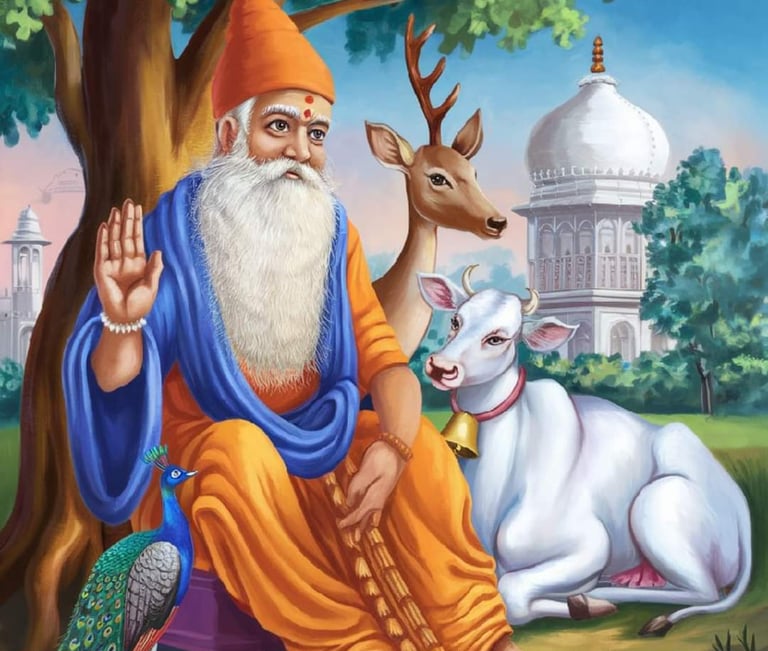
His teachings were in poetic form, known as Shabadwani. His teachings are covered by 29 principles and 120 shabads. Eight of the twenty-nine principles are strict guidelines for the protection of the environment, biodiversity, ecology and at the same time they inspire good animal husbandry and compassion for living things.
These principles strictly prohibit the killing of animals, cutting of green trees, sterilization of bulls, and inspire the conservation of all life forms. Guru Jambheshwar urged his followers not to wear clothes dyed with 'indigo' as the color for dyeing is obtained by cutting down bushes. Jambhoji used his mind and weaved the movement of environment conservation into religious philosophy. In the present times when the world is facing environmental crisis, then the teachings of Jambhoji prove to be very important.
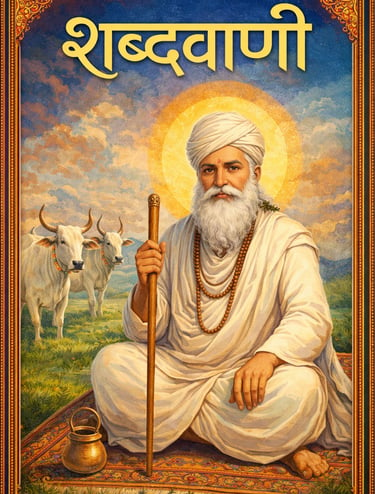
Bishnoism revolves around 29 commandments. Out of these eight aim to preserve biodiversity and encourage animal husbandry. Seven commandments provide directions to healthy social behaviour. Ten commandments are directed towards personal hygiene and maintaining basic good health. The other four rules are guidelines for worshipping God daily.
Jambhoji has emphasized on cleanliness and purity in his rules.
Sera uthe sujeev chhan jal lijiye,
daantan kar kre sinaan jivaanee jal kjiiye’’ (Battees Aakhadee {Vihoji}).
He explained the importance of clean water for health. The rule of drinking water after filtering was fixed so that diseases spread by polluted water could be avoided.
Jambhoji linked the environmental agenda with religion and brought human sensitivity to it. He also gave importance to the significance of rituals in protecting the environment.A lot of the techniques they have been using for centuries are major components of our permaculture practices. They, for instance, grow bushes in their fields to protect the loose sand from wind erosion while providing much-needed fodder for animals during famine. They also prefer renewable sources to meet their daily needs.
ROLE OF JAMBHOJI IN ENVIRONMENT PROTECTION
The two most profound tenets that focus on protecting nature are “Jeev daya palni” (be compassionate to all living beings) and “Runkh lilo nhi ghave” (don’t cut green trees). Green trees should not be felled because they help in ecological balance. Trees absorb carbon dioxide and release oxygen which is the lifeline for humans and animals.
FAQs
What is Jambhoji?
Jambhoji is a revered figure in environmental philosophy.
How to get involved?
What products do you sell?
Why choose green?
What is sustainability?
You can join our initiatives and support green practices.
We offer eco-friendly products promoting sustainability.
Choosing green helps protect our planet's future.
Sustainability means meeting our needs without harming future generations.