“Unatees dharm ki aankadi, hrday dhariyo joi.
Jaambhoji krpa kari naam Bishnoi hoi.”
It means those who will follow these twenty-nine principles by strictly heart, Guru Jambheshwarji will bless them and they will be considered true Bishnoi. Bishnoism was based on main 29 principles or Bisno, from ‘Bees’ (Twenty) and Nau (Nine) and best practices taken from all religions and faiths.
The influence of other religions and sects is clearly visible in his teachings. They have adopted the principles of non-violence and mercy from Jainism and burying the dead from Islam. The Vaishnava sect have a clear influence on his teachings. He laid the foundation of the Bishnoi sect by coordinating the tenets of different religions and sects. Jambhoji can be considered as the synthesizer and protector of various religious traditions and Indian folk culture. Jambhoji’s teachings were very simple, logical, practical and effective.
He believed in one God and did not believe in statue worshipping or leaving social responsibilities to achieve God. Guru Jambhoji gave a simple way which ensures, “Jiye ne jukti aur mariya ne mukti” means an art of living for this life and then Moksha or heaven after this life.
History of Bishnoism
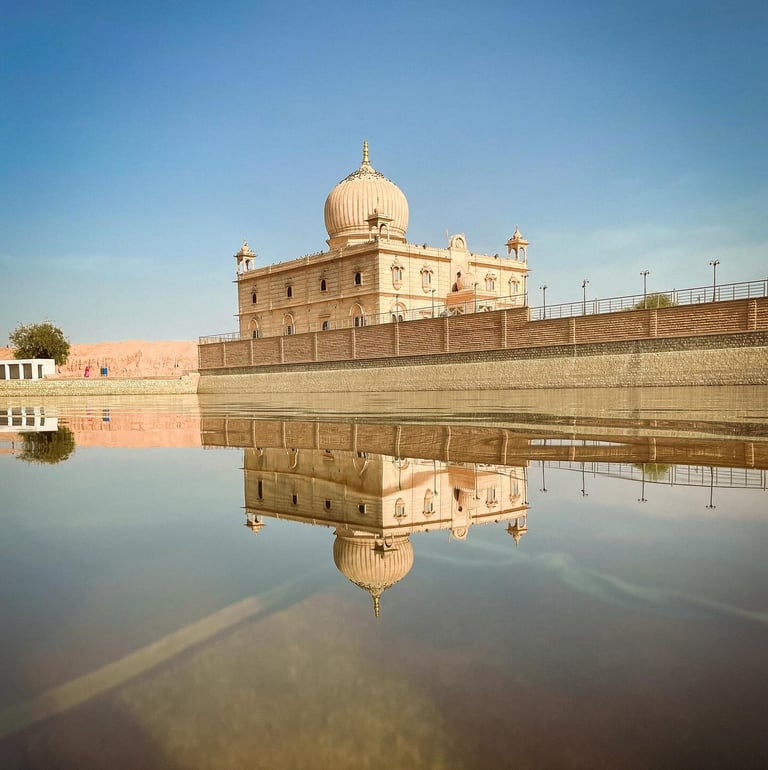
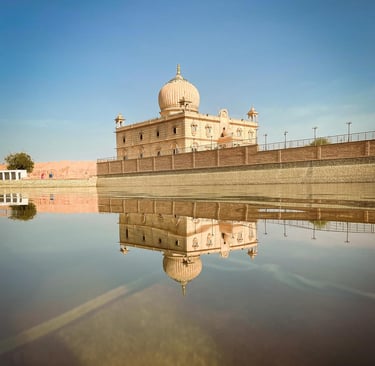
Mukti Dham Mukam, Samadhi of Jambhoji Maharaj
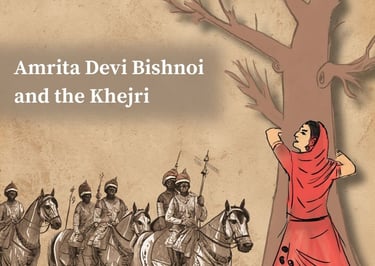
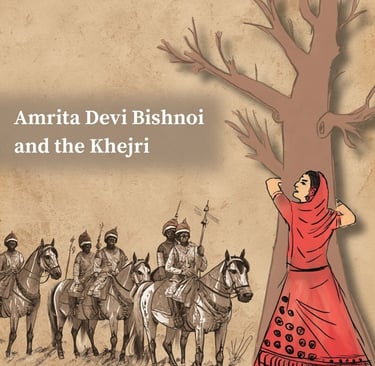
This tradition found its most tragic expression in 1730 at Khejarli, when Amrita Devi Bishnoi and hundreds from her community sacrificed their lives to stop the felling of khejri trees.
The order had been issued by Giridhari Bhandari, an overzealous Khatri official of the Marwar state acting in the name of revenue extraction. Crucially, the ruler Abhai Singh punished Bhandari and institutionalised protections for Bishnoi lands, recognising unchecked extraction as a moral and political excess.